RDLN Rural Development
Institute
Click here for an application.
The four-and-a half week RDLN Rural Development Institute is held every other year during May and June at the University of California at Davis. It has been hosted by the Center for Regional Change and the Community Development Program in the Department of Human Ecology in the College of Agriculture and Environmental Sciences.
At the RDLN Rural Development Institute, participants use the resources of a mainstream university for "core coursework" for rural community development practitioners.
The Institute coursework includes an introduction to macro and microeconomics; an overview of rural issues, peoples, and social dynamics; and an introduction to practical tools and ways of thinking about the field of rural community development in poor rural areas in the U.S.
At the Institute, there is intensive study and exchange among peers from different regions as well as interaction with university faculty and visiting practitioners. Coursework in the following areas complements the online learning and independent study designed by Leaders in consultation with their Advisors for the rest of the credits. Participants pursuing an academic degree are awarded credit for the Institute. Others earn a certificate.
At the Institute, the Leader's Field Project provides a focus for new learning, which in turn can inform the future direction of the project. Later in the RDLN field project and study program, Leaders have a chance to develop “individualized” learning with their Advisors that may relate more specifically to the interests of the individual Leader and the priorities of his/her community.
Learning Components
A. Overview of Rural America
Introduction to major regions, peoples, problems, and challenges
of the rural United States, with an emphasis on groups and places
in poverty and special emphasis on communities represented by
RDLN Leaders. A look at the interrelationship of history, culture,
socioeconomic factors, and choice of strategy for change. Identification
of historical and contemporary trends in the rural U.S. Preparation for and reflection on Institute Field Trip. Identification of historical and contemporary trends in the rural U.S
B. Tools for Rural Development
Introduction to skills, concepts and mechanisms useful for rural community development:
library research, documents research, computer searches, community research and analysis, accessing data, use of statistics; review of programs, structures and technologies, with special sessions on organization and management (e.g. fundraising, board development), expository writing, internalized oppression, youth programs, and food and health policy.
C. Economics and Economic Development
Introduction to basic economic concepts and methodology. Examination
of determinants of economic growth and development. Opportunity
to develop analytical skills in regard to problems of economic
development in rural areas, including an understanding of alternative
institutional systems and structures for the production and distribution
of goods and services. Investigation of how alternative institutional
structures influence the quality of life in rural areas.
Overview of financial markets, institutions and instruments,
including the Federal Reserve system. Introduction to specific
applications such as cost/benefit analysis of rural development
projects and analysis to tax impact and to such functions as
financial intermediation and financial leveraging.
Discussion of specific economic development efforts in some depth
through case studies, including examples from communities where
RDLN students live and work.
D. Organization and Management
Review of structures of community development organizations;
the process of setting institutional goals and objectives; review
of alternative strategies for coordinating the accomplishment
of goals and objectives; alternative means of budgeting and cash
flow analysis; overseeing work flow; matching organizational
structure to the type and size of the enterprise.
Resource People
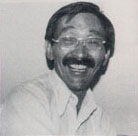 |
Isao Fujimoto, Overview of Rural Issues PhD in Rural Sociology, Cornell University;Co-Founder, National Center for Appropriate Technology; Editor, Change in Rural America |
 |
Maria Varela, Microenterprise Development MRP, U Mass Amherst (National Rural Fellows); Co-author, Rural Environmental Planning; taught at the University of New Mexico and Colorado College
|
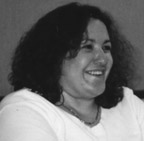 |
Grizelle Apodaca, Organization and Management President, Eslabón Associates
|
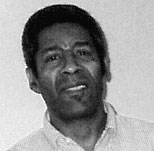 |
Desmond Jolly, U.C. Davis Small Farm Center |
|
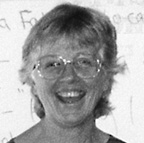
Dr. Margaret Eldred, Writing Workshops Writer and Artist. Former staff, UC Davis Campus Writing Center |
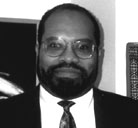 |
Dr. Satyananda Gabriel, Academic Coordinator, RDLN Institute, Economics and Economic Development (1985-present) , (Professor of Economics, Mt. Holyoke College; author, Chinese Capitalism and the Modernist Vision). |
or